Hail Damage Potential in St. Cloud, Waite Park & Sauk Rapids After August 7 Storm
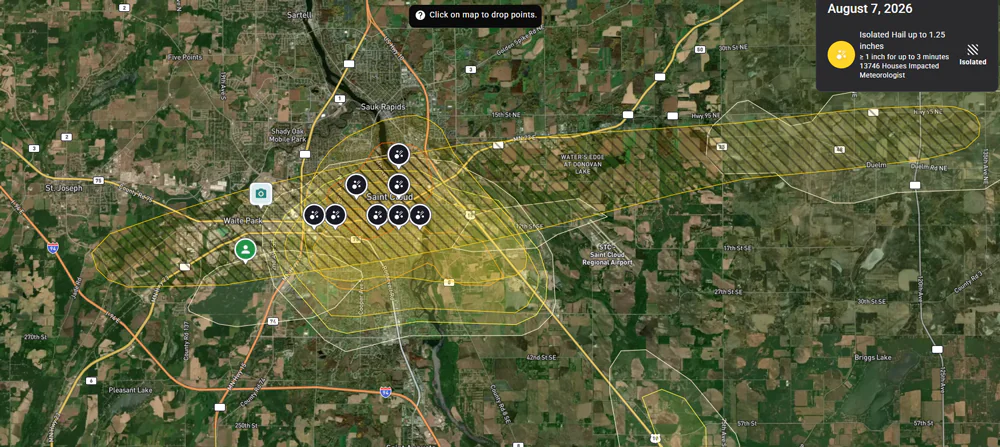
A hail-producing thunderstorm moved through the St. Cloud area late Friday morning on August 7, 2026. Quarter-sized hail was reported across St. Cloud, while radar analysis indicates isolated hail up to approximately 1.25 inches within the storm track.
The storm created a defined path through Waite Park and St. Cloud before continuing east toward Duelm. Parts of Sauk Rapids and nearby communities were also within or near the affected area. Radar mapping indicates that hail measuring one inch or larger may have continued for up to several minutes in portions of the swath.
Not every property within the path will have the same level of impact. Hail size, wind direction, roof age and property exposure can all affect the outcome, and many roofing issues are difficult to identify from the ground.
Committed 365 Roofing provides professionalroof inspections throughout St. Cloud, Waite Park, Sauk Rapids and surrounding Central Minnesota communities.
Get a Free Roof Inspection in Minnesota for Storm Damage, Repairs, or Replacement
Free inspection. Clear answers. No pressure.
Fully licensed and insured across Minnesota. Most inspections completed within 24–48 hours.
Your message was sent!
Thank you for contacting Committed 365! We will reach out to you soon.
A Defined Hail Path Through the St. Cloud Area
This storm produced a clear west-to-east hail corridor through one of Central Minnesota’s most populated areas. The swath crossed Waite Park, moved through St. Cloud and continued east toward Duelm, placing thousands of homes and commercial properties within the potential impact zone.
Properties located directly beneath the core may have experienced repeated hail impacts, while neighborhoods near the edge of the path may have received smaller hail or very little hail at all. This is why two homes located only a short distance apart can have very different results after the same storm.
If your property was within or near the mapped path, a professional inspection is the most reliable way to determine whether damage occurred.
The hail was not widespread across the entire region. Instead, it followed a defined path through heavily developed portions of the St. Cloud area.
Quarter-sized hail can affect shingles, roof vents, gutters, siding and other exterior surfaces, especially when impacts are concentrated or the roofing system has already experienced years of Minnesota weather. The swath’s path through residential neighborhoods makes this storm worth documenting even when no immediate leak or obvious damage is present.
The size and duration of the hail likely varied throughout the storm. A property’s exact location within the swath matters more than its distance from a general city marker.
Communities Potentially Impacted
St. Cloud
Waite Park
Sauk Rapids
St. Joseph
Portions of Sartell
Duelm and nearby areas east of St. Cloud
Damage levels may vary considerably within these communities. Being inside the storm path does not automatically mean a roof was damaged, but it does provide a reason to have the property evaluated.
How This Storm May Have Affected Homes in the Area
Roof impact depends on more than hail size alone. The age and condition of the shingles, the slope of the roof and the direction of the storm can all influence how a roofing system responds.
Some properties may show visible dents on metal vents, gutters or siding. Others may have bruised shingles or granule loss that cannot be seen safely from the ground. A roof can continue shedding water after a storm even when its protective surface has been weakened.
This is especially important in Minnesota, where heat, heavy rain, snow and freeze-thaw cycles can place additional stress on damaged materials over time.
Many roofs with storm impact show no obvious signs from ground level. Avoid climbing onto the roof yourself. A professionalroof inspection can document the condition safely and provide clear next steps.
How One-Inch Hail Can Affect Roof Performance
Hail around one inch in diameter may dislodge protective granules, bruise the asphalt beneath the surface or create small fractures that are difficult to see. Metal components may show dents even when the surrounding shingles appear unchanged.
The effects are not always immediate. A roof may continue to perform normally after the storm, while weakened areas become more vulnerable to future rain, snow and temperature changes.
The condition of the roof before the storm also matters. Older shingles or materials already showing wear may be more susceptible than a newer roofing system exposed to the same hail.
Learn more about Committed 365’sstorm damage roofing services and how severe weather can affect your home’s exterior.
Why Damage May Not Be Visible Right Away
Hail damage is often subtle. A shingle can be bruised without being cracked, and the protective granule layer can be loosened without leaving an obvious bare spot.
These changes may not cause an immediate leak. Problems can develop later as ordinary weather continues to affect the weakened area. By the time water staining appears inside the home, the original storm damage may have been present for weeks or months.
An inspection soon after the storm creates a clear record of the roof’s condition and helps identify concerns before they develop into larger problems.
How to Know If Your Home May Have Been Affected
Your property may have been exposed to the August 7 storm if:
It is located in St. Cloud, Waite Park, Sauk Rapids or near the mapped hail corridor
You experienced hail late Friday morning on August 7
Vehicles, gutters or other exterior metal near your home show dents
Nearby properties are being inspected or repaired
Your roof is older or was already showing signs of wear
Even when none of these signs are obvious, storm impact may still be present. The purpose of an inspection is to replace uncertainty with clear information, not to assume that replacement is necessary.
What Happens If Storm Damage Is Ignored
Not every storm-related issue requires a new roof. Some properties may need monitoring or a targetedroof repair, while others may show no meaningful damage at all.
When damage is present, however, waiting can allow small openings or weakened materials to worsen. Moisture may eventually reach the layers beneath the shingles, leading to leaks, damaged insulation or interior staining.
Minnesota’s freeze-thaw cycles can accelerate that process. Identifying the issue early gives homeowners more options and helps prevent a manageable repair from becoming a largerroof replacement project.
When a Roof Inspection Makes Sense
If your home was within the August 7 hail swath and you are unsure about its condition, now is a reasonable time to schedule an inspection. Visible damage is not required for an evaluation.
A professional roof inspection helps:
Confirm whether storm impact is present
Document the roof and exterior condition
Explain whether monitoring, repair or replacement is appropriate
Committed 365 provides photo documentation, a clear explanation of what was found and honest recommendations without pressure. In many cases, no immediate work is needed.
Schedule Your Free Roof Inspection
If you live in St. Cloud, Waite Park, Sauk Rapids or another community near the August 7 storm path, schedule a free inspection to confirm your roof’s condition.
Committed 365 Roofing provides detailed storm assessments, photo documentation and clear next steps so you can make an informed decision about your home.
Quarter-sized hail was reported across St. Cloud, with isolated larger hail indicated within the storm path. The provided radar map estimates isolated hail up to approximately 1.25 inches.
The primary hail swath crossed Waite Park and St. Cloud before continuing east toward Duelm. Parts of Sauk Rapids, St. Joseph, Sartell and nearby areas may also have experienced hail.
Yes. Hail around one inch can bruise shingles, loosen protective granules and dent exterior metal. The actual effect depends on the roof’s age, condition and exposure within the storm.
Yes, if your property was within or near the hail path and you are uncertain about the roof’s condition. Many types of storm damage are not visible from the ground, and an inspection is the most reliable way to get clear answers.