




After a snowstorm, it’s common for homeowners to look up at their roofline and wonder if it’s actually holding. Heavy snow roof collapse in Minnesota isn’t a common event, but it does happen, usually on roofs that were already weakened or overloaded. At Committed 365 Roofing, we discuss this concern every winter. This guide breaks down how snow weight affects your roof, what warning signs mean you need to act now, and what you can do before the next storm hits.
How Snow Weight Impacts Your Roof
Fresh, powdery snow is deceptively light, but as layers build up, compress, and go through freeze-thaw cycles, snow weight on roof surfaces increases dramatically. Wet, compacted snow can weigh anywhere from three to five times more than the same depth of fresh powder, and ice adds even more density.
Roofs are engineered to handle a specific load, factoring in snow, wind, and the weight of the structure itself. Problems start when snow accumulates faster than it melts or slides off, especially during a stretch of consecutive storms with no thaw in between.
How Much Snow Is Too Much on a Roof?
Most residential roofs can safely hold around 20 pounds per square foot, which translates to roughly two feet of fresh snow or about one foot of packed, wet snow. Flat or low-slope roofs hit their limit faster than steep-pitched roofs, since snow doesn’t shed naturally.
Can heavy snow collapse a residential roof at these levels? It’s possible, but it usually takes a combination of factors, like an already aging structure, poor drainage, or ice dam buildup, pushing the load past what the roof was designed to handle.
Can Snow Damage a Roof Without Causing a Collapse?
Collapse is the extreme outcome, but snow causes plenty of damage well before reaching that point. Ice dams form when heat escaping from the attic melts snow near the roof’s peak, which then refreezes at the colder edges and forces water backward under shingles. That trapped water leads to leaks, damaged insulation, and stained ceilings, all without any structural failure.
10 Warning Signs Before Roof Collapse
Knowing what to watch for gives you time to act before a small problem becomes a structural emergency. Keep an eye out for these signs:
1. Sagging or dipping in the roofline
2. Cracking or popping sounds coming from the attic or ceiling
3. Doors or windows that stick or won’t close properly
4. Visible cracks in interior walls or ceilings
5. Bowing or bending in ceiling tiles or drywall
6. Sprinkler heads or ceiling fixtures that appear to be sagging
7. Snow accumulation over two feet with no signs of melting or shifting
8. Ice dams thicker than a few inches along the roof edge
9. Metal roof panels or supports that appear bent or stressed
10. Unusual creaking or groaning sounds during heavy snow loads
Which Roofs Are Most Vulnerable to Snow Collapse?
Flat and low-slope roofs carry the highest risk, since snow has nowhere to slide off and tends to pile up evenly across the surface. Older roofs with existing structural wear, roofs with a history of water damage, and additions such as sunrooms or garages, which are sometimes built to lighter load specifications than the main house, also carry an elevated risk. Commercial buildings and pole barns with wide unsupported spans face similar exposure.
What To Do if You Notice Signs of Excessive Snow Load
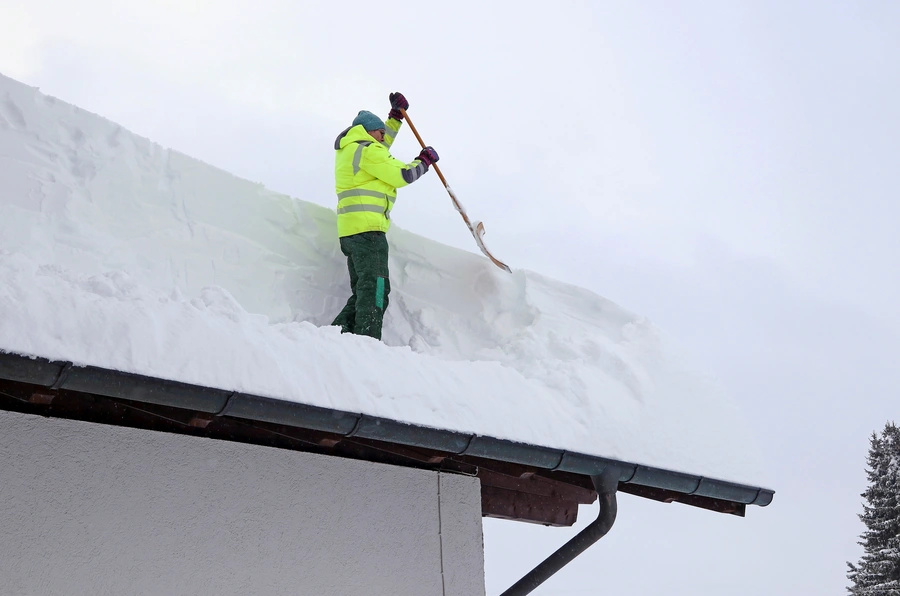
If you notice any of the warning signs above, get everyone out of the affected area first. Structural safety always comes before checking on damage. Then, contact a roofing or structural professional immediately rather than attempting to clear snow yourself, since walking on a compromised roof adds weight and risk.
How to Prevent Snow-Related Roof Damage
A roof rake used from the ground can safely remove excess snow from lower roof edges without anyone climbing up. Proper attic insulation and ventilation reduce the heat loss that causes ice dams in the first place, and keeping gutters clear in the fall gives melting snow somewhere to go instead of backing up under shingles.
When to Call a Roofing Professional
Call a professional any time you see structural warning signs, when snow accumulation exceeds safe limits for your roof type, or after any winter storm severe enough to cause damage elsewhere in the neighborhood. It’s also worth a call if your roof is older or has a flat or low-slope design, since those structures benefit from a professional inspection before winter starts.
FAQ
How much snow can a residential roof hold before it’s at risk? Most homes can safely handle around 20 pounds per square foot, roughly two feet of fresh snow or one foot of packed, wet snow, though roof age and pitch affect this significantly.
Can heavy snow collapse a roof even if it looks fine from the ground? Yes. Structural stress often shows up first as sounds, sticking doors, or ceiling cracks well before visible sagging appears outside.
Is it safe to remove snow from my roof myself? Lower edges can often be cleared safely from the ground with a roof rake. Climbing onto a snow-loaded roof adds weight and risk and should be left to professionals.
Get Your Roof Checked Before the Next Storm
Snow load isn’t something to guess about, especially on an older roof or one that’s already showing wear. Committed 365 Roofing provides winter roof assessments for homeowners, so you know exactly what your roof can handle before the next storm rolls in. Reach out to schedule an assessment.